Thursday, January 12, 2012

The Link Between Gum Disease and Heart Attacks

Gum Disease May Relate To Heart Attack Risk

Previous studies have found that the incidence of heart disease is about twice as high in people with periodontal (gum) disease, but until recently no plausible cause had been suggested.  Now studies indicate that the most common strain of bacteria in dental plaque may cause blood clots.  When blood clots escape into the bloodstream, there is a relation to increased risk of heart attacks and stroke.

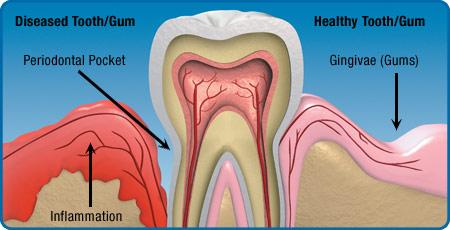
People with periodontal disease (over half the adult population) have an infection  that causes chronic inflammation of the gums.  Also, it is a path for these bacteria to enter the bloodstream.  A recent study describes the association between heart disease and gum disease to be at least as strong as the linkage of heart disease to cholesterol, body weight, or smoking.

Incidence of Periodontal Disease

Unlike most diseases that give us early warning signs, gum disease progresses silently, ofter without pain.  It may develop slowly or progress quite rapidly.  More that half of all people over 18 years of age have at least the early stages of periodontal disease.  Even more alarming, after the age of 35, three out of four people are affected to some degree.  Periodontal disease is an infection that destroys the gum surrounding your teeth and also destroys the supporting bone that holds your teeth in place.


Periodontal disease may increase  your risk for a variety of health concerns including:  weakened immune system, diabetes, stroke, lung disease, preterm, low-birth-weight babies, kidney disease, respiratory disease, osteoporosis, gastric ulcer, and prosthetic joint complications.  Evidence is mounting relating gum disease to a variety of health concerns, some that are life threatening.  By keeping regular re-care appointments with your dental team, you help increase your chances for a long and happy life.

Determining Periodontal Disease

We can help you better understand periodontal disease and how you can prevent it.  We will painlessly check and monitor the condition of your gums during your re-care appointments.  Your examinations may show signs of infection, such as bleeding or pockets (spaces between the teeth and gums) that are deeper than normal.  Dr. Dulski may suggest a course of treatment that will stop any further damage to your gums and bones.  We will then design a home-care regimen for your specific needs!  Even healthy looking teeth may have gum disease.  Visit Adult Dentistry of Rochester for a simple exam to learn the health status of your gums.


Tags: Gum Disease, Periodontal Disease, Heart Attack, Stroke

Wednesday, January 11, 2012

Cracked Tooth Syndrome

You may have a very common problem in one of your back teeth - a cracked tooth.  Teeth may crack when subjected to the stress of chewing hard foods or ice, or by biting on an unexpected hard object, like a popcorn kernel.  Teeth with or without fillings my have this problem.  Teeth restored with silver fillings (dental amalgam) are most susceptible.  You may realize that you have a cracked tooth if you find yourself chewing on one side of your mouth, your teeth are sensitive to hot or cold, or sweet or sour food, or you feel a sharp pain when chewing or the pain that you feel is intermittent.


Treatment For Cracked Teeth:

!)  Simple Crack:   The majority of cracked teeth (about 90%) can be treated by placement of a crown on the tooth.  When the tooth is prepared for the crown, and a temporary crown is placed, the pain usually is alleviated.  If this is the case, then the final crown can be placed to resolve the problem.

2)  Complex Crack:  Occasionally (about 10%), the tooth cracks into the nerve of the tooth.  If pain persists after placement of a temporary crown, then the crack likely involves the nerve of the tooth.  The tooth then requires root canal treatment to resolve the pain.  If the crack extends beyond the nerve into the root of the tooth, then there is no hope of restoring the tooth and the tooth needs to be removed.  The best hope of avoiding tooth loss is early crown treatment to strengthen and protect the tooth from a progressively deepening crack.  Visit Adult Dentistry of Rochester to learn if you have cracked tooth syndrome.

Tags:  Cracked Tooth Syndrome, Cracked Tooth, Dental Crown, Dental Amalgam

Tuesday, January 10, 2012

Periodic Oral Exam

Your dentist periodic oral exam is a necessary part of your re-care appointment with your dental hygienist to help keep your teeth and gums healthy.  While watching television you probably noticed that gingivitis has made it to prime-time advertising.  For millions of people, the emphasis in dental visits has sifted from treatment of tooth decay to prevention of gum disease.


Have you noticed any of the early warning signs of gum disease?  Do the gums bleed when you brush?  Are the gums red, tender or swollen or detach from the teeth?  Does pus appear from the gum-line when the gums are pressed?  Have teeth become loose or shifted?  Is there any change in the way that your teeth fit together when you bite?  Is there any change in the fit of partial dentures?  Is there chronic bad breath?  Your dentist can help you with any of these problems.

In addition to the periodic oral examination of your lips, cheeks, teeth, gums, tongue and palate for suspicious tissue changes, the probing of the gums during the periodontal exam is performed specifically to detect the early signs of the progression of gum disease to bone decay or periodontal disease.  Dr. Dulski introduces the periodontal examination by stating, "Probing depths of ones, twos of threes with no tenderness or bleeding indicates healthy gums.  Measurements of four or more with tenderness or bleeding is a sign of infection."  This gives the patient the opportunity to learn the health status of the gums as Dr. Dulski calls out the measurements for the recording of the periodontal exam.  At Adult Dentistry of Rochester, our goal is early detection of periodontal disease through your periodic oral examination.  Our message is, "Healthy gums don't bleed.  Early detection and treatment of periodontal disease avoids tooth loss."
Tags: Periodic Oral Exam, Dentist, Periodontal Exam, Gingivitis, Periodontitis

Tuesday, January 3, 2012

Feeding the Foe

Research proves that there is a direct correlation between sugar intake and dental plaque formation.  Tooth decay and gum disease are basically caused by dental plaque, it's really just that simple.


Dental plaque is the sticky, colorless film that constantly forms on the teeth.  This dental plaque is a combination of bacteria, sugars, and foods.  When left on the teeth, dental plaque will turn into destructive acids.  It is these acids that cause damage in the mouth through tooth decay and gum disease.  If the sticky foods which contain sugar were consumed less frequently, or preferably, eliminated from the diet, then tooth decay and gum disease would decrease significantly.

For your good dental health, be on the look-out for foods that have a high nutritional value and do not include sugar.  Raw fruits and vegetables are good choices as well as snack foods like tomato juice, peanuts, celery, carrots, and popcorn.  Get in the habit of checking product labels for added sugar.  A close look at the label will tell you whether or not it contains sugars.  When checking the labels, remember that sugar may also be listed as corn syrup, sucrose or dextrose.

Sucrose is the primary villain.  Sucrose or table sugar is known to contribute greatly to dental plaque formation because it is so easily metabolized by bacteria.  Plaque must be on the teeth in order for tooth decay and gum disease to begin.  It is true that people need sugar for energy, however it is not necessary to get it from sucrose-laden foods.  There are plenty of foods that have more complex natural sugars that bacteria cannot metabolize so readily to acids in the mouth.  Substitute peanuts, popcorn, cheese, and fresh fruits and vegetables for candy, cookies,  pies and soft drinks.


You are in charge of your dental health on a daily basis.  Success in a lifetime of great oral health depends on you.  Eat a balanced diet with good control of sucrose sugar intake to help build a healthy diet. And, visit Adult Dentistry of Rochester for regular check-ups to partner with your dental hygienist for the support that will assure success.

Tags: Dental Health, Dental Plaque, Tooth Decay, Gum Disease, Dental Hygienist

Thursday, December 8, 2011

Don't Ignore Your Dental Health

If we haven't seen you for quite some time, this could mean serious consequences for your teeth and gums, such as eventual tooth loss or worse, major gum surgery.  Many types of dental problems require continuing care; the kind of care you can only get from your dentist.  Without this continuing care, the problems can progress and worsen, and this can have dangerous effects on your dental health.


                                                           Gum disease, not one is immune.

For example, did you know that gum disease is blamed for approximately 50% of all missing teeth?  Did you also know that some form of gum disease affects 87% of the population?  And, did you know that gum disease can be prevented with proper care?

                                                      Know the warning signs of gum disease.

Healthy gums are firm and resilient.  And, even though gum disease sometimes progresses without symptoms, there are some symptoms that almost always mean a problem with gum disease.

Warning sign checklist:

*  Gums that bleed when you brush or floss
*  Swollen, red and tender gums
*  Gums that have separated from the teeth
*  Loose teeth or teeth that look long because of receding gums
*  Changes in the way teeth or partial dentures fit together
*  Persistent bad taste or bad breath

If you're experiencing any of these symptoms, it's important that you come in right away. 
when we catch it in its early stages, gum disease can often be treated non-surgically.  Remember too, that gum disease doesn't always display symptoms.  If you haven't been checked in awhile, it's important that you come in so we can find any problems in their early stages.

                                                   Don't wait until you have a problem to call.

Tartar that forms on the base of your teeth and under your gums can, and will, actually pull your gums away from your teeth.  This process causes pockets in the fums where diseases flourish - and become harder to get to.  Your teeth will become loose, and you may eventually lose them.  We use the best gum care available.  It's called soft tissue management, and it's a non-surgical approach that is less costly and far less painful than having gum surgeryGum disease doesn't have to be a fact of life.  And that's the message we want to get across to you.  When we're able to detect gum disease early, you won't have to suffer painful surgery or the expense of replacing lost teeth.  Remember, only the trained eye of your dentist can spot problems like these in their earliest stages, and prevent pain and discomfort later.

                                                Why you should replace those missing teeth. 

If you're missing one or more permanent teeth, those empty spaces can lead to serious problems affecting your entire mouth.  A lot of people think, "If it doesn't show, it doesn't matter."  This is not true, however, because teeth are designed to support each other.   When a tooth is missing, adjoining teeth tend to move toward the open space to fill it in.  In addition to serious bite problems, this tooth movement can contribute to cavities and gum diseases, and often results in even more teeth being lost.  While our main goal is to prevent the loss of teeth, there are things we can do to replace them and prevent further problems.  But, we can't help if you don't come in.


                                                               Now you can see what I see

Thanks to revolutionary advances in dentistry, new technology has made it possible for you to see the same things that I see when you come in for a check-up.  We offer intra-oral  video imaging.  It looks like a wand with a light tip.  That light is a video camera that magnifies the inside of your mouth and projects the image on a monitor.  But what does all this mean to you?  It means that when I talk about plaque and gum disease, you'll be able to see it.  That may sound a little gruesome, but it will help you understand how important good dental hygiene and regular cleanings are to your teeth and gums.

                                                       Please call us for an all important exam.

Don't rely on your own eyes to spot problems.  Or on  your own judgement to diagnose conditions.  Again, it takes training to spot most tooth and gum problems in their earliest stages.  Remember:  Only a dental professional can see many  problems and know how to treat them.  Before you have a problem that needs extensive care, visit the professionals at Adult Dentistry of Rochester.  Preventive care is your best defense against tooth and gum decay,  not to mention possible surgery.

Tags: Gum Disease, Tooth Decay, Intra-Oral Camera

Monday, December 5, 2011

Why Be Concerned About High Blood Pressure?

Blood pressure is the amount of force that the blood exerts on the walls of the blood vessels as it passes through smaller and smaller branches to all parts of the body.  The branches of the circulatory system eventually reach the organs where abnormally high blood pressure can harm the smaller branches of the circulatory tree.  The body structures that chronically high blood pressure (hypertension) affects the most include the heart, brain, kidneys, and eyes.  The diseases resulting from blood vessel damage in these organs are congestive heart failure, stroke, blindness, heart attack, and kidney failure.

For example, high blood pressure is a factor in 2/3rds of strokes, 2/3rds of heart attack, 3/4ths of heart failure, and 1/4th of kidney failure.  High  blood pressure is also a factor in Alzheimer's Disease.  Many people do not have symptoms of high blood pressure until blood vessel damage in these organs causes disease, so the conditions in the early stages when these diseases could be prevented are ignored because there is no discomfort.  Getting high blood pressure under control at an early stage can add years to a person's life.  At Adult Dentistry of Rochester, we routinely check your blood pressure.  Visit us to learn your blood pressure, what it means to your health, and what life style changes can improve your blood pressure and quality of life.

Tags: High Blood Pressure, Hypertension, High Blood Pressure

Friday, November 18, 2011

Esthetic Management of Extractions

Tooth extraction typically leads to loss of tooth-bone width and height leading to a less than attractive tooth replacement with a dental implant.  Studies show that tooth-bone preservation using Freeze Dried Bone Allograft (FDBA) and a collagen membrane improves tooth-bone height and width dimensions when compared to extractions alone.  These dimensions retain the normal architecture of the tooth-bone for a more natural-appearing implant placement, especially in the smile zone.


These techniques improve both the quality and quantity of bone available to support the implant increasing the chance of implant success.  Tooth implants are the most natural way to replace a lost tooth.    For a free consultation to learn how these restorative procedures can restore your smile to its natural beauty, visit Adult Dentistry of Rochester.

Tags: Tooth Extraction, Dental Implants

Thursday, October 27, 2011

Stop Bad Breath

Chronic bad breath is a problem for millions of Americans.  The American Dental Association recently did a survey that showed that over 90% of dentists see patients with bad breath.


Is there really a solution?  Not when people use mouthwashes and mints to mask the odor.  Many mouthwashes contain alcohol which worsens the condition by drying the mouth and mints are candy which promote tooth decay.  To provide a real solution, one must investigate the causes of bad breath and eliminate them.  At Adult Dentistry of Rochester, Dr. Dulski provides bad breath diagnosis and treatment in a comprehensive way.  While transient bad breath caused by garlic, foods or burping is mainly a social problem, chronic bad breath can be an indicator of a health problem.

Anatomically speaking, the mouth is the dominant source of chronic bad breath, followed by the sinuses, lungs and in very rare cases, the stomach.  Chronic bad breath is primarily caused by dying bacteria in the mouth and gums that give off sulfur based gases called Volatile Sulfur Compounds.  The higher the number of bacteria present, the more dying bacteria there are  generating these gases.

People try all kinds of breath tests to learn if they have this embarrassing condition.  You may have tried to sniff a puff of your breath in your hand, or risked asking family or friends.  However, the best test is asking your dentist.


Today, we know more about diagnosing and treating bad breath than ever before.  Our professional dental team is equipped with the knowledge and equipment to provide you with effective programs to help you restore your sparkling fresh breath.  We can determine the source of odor in the oral cavity by determining the health of the gums.  Gum disease, or gingivitis is caused by the same bacteria that can cause bad breath.  Another major source is the tongue which collects a coating on its surface that harbors bacteria.  We can prescribe specialized aids that help in removing bacteria along the gums and on the tongue, as well as a  mouth rinse that chemically neutralizes the odor in the mouth.

Got bad breath?  Don't be the last to find out!  You either have bad breath and don't know it, suspect you have bad breath, or want assurance that your breath will always be fresh and clean.  Visit Adult Dentistry of Rochester to take the steps necessary fora sparkling fresh breath every day..

Tags: Bad Breath, Fresh Breath, Gum Disease, Gingivitis

Wednesday, October 26, 2011

What Every Person Needs to Know About Dental Care

Teeth are meant to last a lifetime.  Dentures are not a replacement for missing teeth in fit, comfort and appearance.


Fillings, veneers, crowns do not replace lost enamel.  Enamel, in a healthy mouth, can last the life of the individual.  Restorations, at best, are a short term substitute for lost enamel, needing to be replaced many times over a lifetime.  The average life of a restoration is 8 to 10 years.

Advanced, tooth colored materials not only look better and feel better, they last longer.  Newer composites and porcelains better mimic the expansion and contraction of the tooth due to hot and cold.  The result is a restoration that does not shrink away from the tooth to create a gap or split the tooth.

Remember, enamel in a healthy mouth can last a lifetime.  And, consider that without gaps or cracks, a better fitting restoration makes for a healthy mouth.  Therefore, advanced restorations can last longer because they make for a healthier mouth.

The healthier the mouth, the longer lasting the natural and restored tooth.  You can't reduce the cost of dental restorations, but you can reduce the cost of dental care to keep teeth for a lifetime by reducing the need for restorations and making restorations last longer.

Now, gums reflect the health of the mouth.  Healthy gums are not red, tender or swollen.  By measuring and scoring the health of gums, the effectiveness of teeth cleaning can be reported to optimize the result.  Optimal teeth cleaning means a healthier mouth and longer lasting restorations.

Straight teeth are easier to clean and therefore cleaner.  Crooked teeth are crowded or have gaps which are hard to clean areas.  Straight teeth are healthier teeth and therefore last longer.

Straight, natural teeth are healthier than crooked teeth which are healthier than missing teeth.  Straight, clean (white) teeth are a sign of healthy teeth which is physically attractive.  Visit Adult Dentistry of Rochester for advanced dental care which conserves natural teeth in a straight, healthy environment for a lifetime of health and beauty.

Tags: Dentures, Fillings, Veneers, Crowns, Straight Teeth, Teeth Cleaning

Are You Neglecting Your Teeth?

Fear, expense and inconvenience are the three dragons that keep half of the population from  seeking more that emergency dental care until the pain of an emergency is unbearable.  Afraid of the dentist?  It's normal!  At Adult Dentistry of Rochester we can help!  We're absolutely dedicated to providing your family's dental care as comfortably as is modernly possible.  We welcome cowards.  Besides explaining the procedures before performing them and using a very gentle touch, we have nitrous oxide sedation available.  Or if you prefer, we can write a prescription for a sedative or tranquilizer for you to take one hour before your appointment.


Nitrous oxide is a sedative gas that you breathe through a small mask over your nose.  The relaxed and dissociated feeling disappears soon after the gas is turned off.  You can drive back to your home or office responsibilities right away.  However, if you prefer a deeper level of sedation, conscious oral sedation administers oral medication along with nitrous oxide.  You must know that the effects of this combination lasts longer than nitrous oxide alone, so someone must drive you home.

Previously, your comfort during dental treatment was limited to local anesthesia and nitrous oxide.  Now, we use vibratory anesthesia to assist your comfort during the injection process.

Afraid of the cost?  Postponing needed dental care can result in more extensive and expensive procedures during a time that is most inconvenient to you.  If you are postponing needed dental care because of finances, flexible payment plans, including interest free financing for 12 months will take the fear out of dental expense.


Afraid to take the time?  The total cost of dental care is the fee plus the cost of your time away from home or office.  To minimize the real cost of dental care, the flexible hours of early morning and evening hours minimize interference with your busy schedule.  Visit Adult Dentistry of Rochester to learn how we tame these three dragons to help you receive the dental care you deserve.

Tags:  Nitrous Oxide Sedation, Conscious Oral Sedation, Flexible Payment Plans, Flexible Hours

Tuesday, October 25, 2011

Infection Control in the Dental Office

In this era of public concern and media coverage about infectious diseases, such as hepatitis B and acquired immuno-deficiency syndrome (AIDS), you should be aware that at Adult Dentistry of Rochester, we use numerous infection control procedures to prevent transmission of infectious diseases in our dental office.

Universal Precautions

You may be surprised to learn that the most frequently performed procedures in our office are not six month check-ups or even filling cavities,  the most common procedures are designed to accomplish good infection control with every patient.  This is called applying "universal precautions,"  infection control measures that are the same for every patient.  These include: wearing gloves;, changing gloves and washing hands between patients; using instruments and other items that can be thrown out after use; and sterilizing equipment that can be reused.

What We Do

Before you enter the treatment room, the dental unit and chair are cleaned and disinfected with antimicrobial chemicals.  All dental instruments are either sterilized or disinfected, as appropriate for the type of material.  Most instruments can stand high heat.  These are first ultrasonically cleaned and then sterilized by steam heat in an autoclave.  Those few instruments that cannot be heat sterilized or disposed of after use are first cleaned and then disinfected with special high level chemical sterilizers.  Both methods are approved by the Center for Disease Control and the American Dental Association (ADA).

Sterilization of Dental Hand-Pieces

For years, the ADA has recommended the heat sterilization of dental hand-pieces (dental drills) for equipment that can withstand repeated heat cycles.  Modern technology has now made it possible to sterilize all re-usable hand-pieces.  At Adult Dentistry of Rochester, all of our dental instruments and hand-pieces are cleaned, lubricated, and heat sterilized between each patient use.


Check-List for Patients

We care about the health and well-being of all of our patients and employees.  To prove this for yourself, use the following check-list the next time you visit Adult Dentistry of Rochester and note how we perform each item:
*  washing hands and changing gloves
*  appropriate disinfection of surfaces and sterilization of equipment
*  keeping office spotlessly clean
*  using disposable items
*  wearing protective clothing
*  providing wrapped, sterile instrument for surgical procedures
*  properly cleaning and sterilizing dental hand-pieces
*  proper disposal of infectious waste

Safety is our concern.  We take the responsibility of treating you and your family seriously.  If you have any question, please do not hesitate to talk with Dr. Dulski or any member of the staff at your next visit or contact us at Adult Dentistry of Rochester.

Tags: Infection Control, Sterilizing Dental Hand-Pieces, Universal Precautions
 

Monday, October 24, 2011

Optimizing Your Dental Insurance Benefits

Now is the time to plan for the completion of your dental treatment before the end of the year.  All insurance plans have a yearly maximum.  If you do not use this maximum amount, the remainder is lost.


If you have already met your deductible, and you have treatment to be completed, or to be started, then take advantage of your benefits this year. If necessary, we can use the maximum allowed this year, and complete the treatment next year with next year's allowance.

Good planning will allow you to take advantage of the full benefit of your policy.  Please do not wait until the last few days of the year, when scheduling will make it difficult to appoint a convenient time for you.

At Adult Dentistry of Rochester, our goal is to provide you with quality dental services.  If we can help you maximize your dental insurance coverage in the process, we will be very pleased.  Visit Adult Dentistry of Rochester or give us a call at 585-442-1230 to schedule an appointment today!

Tags:  Dental Insurance

Tuesday, October 11, 2011

Effective Pain Control

At Adult Dentistry of Rochester, effective pain control is one of the most important aspects of patient care.  Researching the dental history of new patients, Dr. Dulski asks the question, "Have you ever had a bad experience in a dental office?"  He found the most common response is difficulty getting numb.  The failure to completely numb a tooth prior to a dental procedure is the most serious difficulty facing patients in the dental office and is the patient's greatest fear.


This is a particular problem when teeth are abscessed and the lower molar is involved.  The reason for this is the change in tissue chemistry caused by the infection making the anesthesia less effective on the nerve fiber and the increased density of the bone in the lower jaw making the penetration of the anesthetic solution through tissue to the underlying nerve more difficult.  Numbing an upper tooth by depositing solution in the tissues next to the root of the tooth is sufficient to allow the solution to infiltrate to the nerve to stop the transmission of pain signals effectively numbing the tooth.  Because of the thicker bone in the lower jaw preventing this infiltration, an injection is given more deeply in the tissue before the nerve enters the bone.  And here is where the difficulty arises.  Failure rates for this type of block injection versus an infiltration injection are caused by the absence of landmarks to help a dentist locate the proper site to deposit the anesthetic solution deeply in tissue.  It is many times more difficult to deposit solution next to an elusive nerve in the back of the mouth than next to the roots of a visible tooth, thus, the higher failure rates for consistently completely numbing a lower tooth.

This difficulty in providing consistently reliable numbness for a lower tooth can be frustrating for most dentists.  The term "mandibular slump" accurately describes the problem faced by dentists, when for no apparent reason, they endure periods of almost absolute failure when performing a mandibular block injection.  Patients whose dentist were able to successfully numb their  lower teeth now have to undergo multiple injection or suffer through incomplete numbness.  The problem soon may become psychological, leading the dentist to doubt his abilities.


At Adult Dentistry of Rochester, we specialize in completely numbing patients who have had difficulty in the past and manage the associated anxiety of dental care with sedation.  Dr. Dulski uses alternative injection techniques and devices to the traditional mandibular block injection should that prove necessary to completely numb lower teeth prior to dental procedures.  Visit Adult Dentistry of Rochester to learn how we focus exclusively on your comfort, and assure that you are fully relaxed and anxiety-free.  Dr. Dulski is committed to not even attempting a procedure unless you are 100% comfortably numb while in his care.

Tags: Pain Control, Mandibular Block Injection

Thursday, October 6, 2011

The Problem With Dentures

Some people believe that their dental problems will be solved if they have their teeth removed and get dentures.  However, as many denture wearers have found, this is just the beginning of a new set of problems.  Some of these problems include difficulty eating and tasting food, gagging, sore spots, loss of jaw bone,  the need for ongoing denture adjustments and fabrication of new dentures to replace worn dentures, and changes in facial appearance.


Eating takes longer with dentures because you can only apply a fraction of the biting pressure that you can apply with natural teeth.  This makes many foods more difficult to eat, particular high fiber foods like fruits and vegetables which are essential for good nutrition.  Tasting foods is also a problem, particularly with upper dentures which cover the taste buds on the palate.  Gagging is also a problem because many people gag when the back of the palate is touched making the upper denture difficult to wear.

Sore spots occur from the transmission of biting pressure from the denture to the tender gum tissue pinched between the base of the denture and the bone beneath the denture.  Gum tissue was never meant to assume the role of chewing that the hard tissue of the teeth was designed to support.  The most serious problem is the loss of jaw bone from the pressure of the denture on tissue.  Natural teeth are suspended in a ligament that applies tension to bone during chewing to stimulate the growth of bone.  Without teeth, the direct pressure applied to bone by a denture causes the recession of bone.  After many months of denture wear and bone recession, the denture will need to be relined.  After many years of wear and refitting, the dentures will need to be replaced with a new set.

Bone recession and ill-fitting dentures is a particular problem with the lower denture.  The rim of bone supporting the lower denture is narrower to begin with.  The lower jaw moves during chewing and speaking and the tongue moves through the middle of the denture.


The loss of jaw bone also changes your appearance.  Your nose gets closer to your chin and your lips lose support of the teeth and gums and collapse.   This causes wrinkles and makes you look older.  When you  add up all the costs, dentures can be more expensive than the cost of treatment to save your natural teeth.  The cost of dentures include removing your teeth, making the dentures and the periodic relines and cost of new dentures every 8 - 10 years.

For all these reasons, Dr. Dulski recommends that you choose treatment to keep all of your natural teeth.  You will look better, feel better and be more confident.  Visit Adult Dentistry of Rochester to learn how we can help you keep your natural smile.

Tags: Dentures, Preventive Dentistry, Restorative Dentistry

Monday, October 3, 2011

Controlling Chronic Inflammation

Inflammation is from the Latin, inflammare, which means to set on fire and is part of the bodies response to disease causing bacteria and toxins.  The body initiates healing from an injury like a cut with a reaction that produces red, tender and swollen tissue.  This reaction allows healing cells from the blood stream to infiltrate the injured tissue to kill bacteria, remove damaged cells and grow new tissue.   The inflammation of the typical healing process is temporary.


It is when inflammation is not quickly resolved with healing that local inflammatory factors can spread throughout the whole body.  Inflammation can then become a wildfire that spreads out of control causing tissue destruction distant to the site of the original infection.  This chronic inflammation can result in atherosclerosis, the blood vessel disease of heart attacks and stokes.  Evidence of chronic inflammation in the mouth is the red, tender and swollen gums of periodontal disease.  The earliest and easiest stage of periodontal disease to treat is gingivitis.


That's why your routine dental check-ups and cleanings are so important - not just for the health of your teeth and gums, but for your general health.  Visit Adult Dentistry of Rochester for your next periodic dental check-up and cleaning where we check the health of the gums with a complete periodontal exam at every visit and thoroughly remove the deposits of bacterial plaque which fuel the fire of gingival inflamation.

Tags: Periodontal Disease, Gingivitis, Periodontal Exam

Tuesday, September 27, 2011

Periodontal Maintenance

A routine oral prophylaxis (routine teeth cleaning) includes scaling or polishing procedures to remove plaque, calculus and stains from the crowns of teeth.  A routine cleaning is performed on healthy tissue or in the presence of inflammation, gingivitis, the response of healthy tissue to the toxic deposits of bacterial plaque and calculus.  A routine cleaning is performed every 3,4 or 6 months to maintain healthy gums or reverse a gingivitis to return the mouth to health.


Periodontal maintenance is initiated following the treatment of periodontal disease, the loss of tooth support to gum and bone decay resulting in unsupported and exposed root surfaces.  Periodontal maintenance includes the removal of bacterial plaque and calculus from the crowns and exposed root surfaces of teeth above the gum-line and deposits on the root surfaces of teeth below the gum-line.  Periodontal maintenance is performed every 3 months to prevent the progression of periodontal disease.

Once tooth support has been lost, it cannot be restored.  Tooth loss in periodontal patients has been shown in studies to be inversely proportional to the frequency of periodontal maintenance.  Ten years following completion of periodontal therapy, patients who had received periodontal maintenance had significantly less progressive gum and bone decay and reduced tooth loss compared to patients who had not received periodontal maintenance.  In fact, numerous studies have demonstrated the effectiveness of periodontal maintenance and have shown that progressive periodontitis can be prevented or limited by optimal personal oral hygiene and thorough periodontal maintenance.  Since patients are rarely completely effective in removing plaque at home, 3 month periodontal maintenance eliminates or reduces the toxic effects of bacterial plaque on teeth and supporting tissues.


Patients with a history of periodontitis require continuing periodontal maintenance since brushing and flossing alone has not been shown to control the progression of attachment loss.  Occasionally, despite the best efforts of the dentist and hygienist, some patients may suffer tooth loss despite continuous periodontal maintenance.  Additional diagnostic information, such as microbial and genetic testing, as well as antimicrobial therapy and periodontal surgery my be required for these patients.  For a free periodontal exam which includes an update of your medical and dental histories, extra-oral and intra-oral soft tissue examination, dental examination, periodontal evaluation, implant evaluation, and radiographic review, visit Adult Dentistry of Rochester.

Tags: Oral Prophylaxis, Periodontal Maintenance, Teeth Cleaning, Periodontal Disease, Gingivitis, Gum Disease

Thursday, September 1, 2011

Are You At Risk For Periodontal Disease?

There are several factors that increase the risk of periodontal disease, an infection that causes decay in the gum and bone supporting teeth.  These risk factors are:

Smoking or chewing tobacco - not only is periodontal disease more prevalent in smokers, periodontal treatment is less successful in those individuals who smoke.

Diseases that affect the whole body - such as diabetes, blood cell disorders, and, HIV-AIDS are among the diseases that can lower resistance to infection, making periodontal disease more likely and severe.

Medications - steroids, anti-seizure drugs, cancer therapy drugs, blood pressure drugs and birth control pills - can affect the gums.  Some of these medications have the side effect of reducing salivary flow which lowers the cleansing and buffering effect of saliva resulting in increased plaque accumulation and acid attack which causes tooth decay and gum disease.

Teens, pregnant women, and those taking birth control pills face changes in the body's hormone levels which can cause the gum tissue to be more inflamed by the toxins in bacterial plaque.

Genes play a role.  Some patients may have a gene that causes the gums to become more inflamed in response to bacterial plaque.  The result is more severe and rapid progression of periodontal disease.  If your parents wear dentures or you have a family history of tooth loss due to gum disease, then you may carry this gene.

The specific types of bacteria that cause periodontal disease are passed from mother to children due to the intimate physical contact of child rearing, or between partners through the saliva.  You help your children avoid gum disease by taking care of your own oral health.  Some parents mistakenly think that they are caring for their children by neglecting their own health.  For a free periodontal exam and consultation with Dr. Dulski to assess your risk for periodontal disease, visit Adult Dentistry of Rochester.

Tags: Periodontal Disease, Gum Disease

Tuesday, August 9, 2011

Dental Care For Senior Adults

As we age, we notice graying hair, more frequent aches and pains and wrinkles.  Our teeth and mouths are also affected by aging.

Dental cavities are not just for kids.  As we age, receding gums can expose the unprotected root surfaces of teeth resulting in root cavities.  Many seniors also have a number of old fillings.  On average, fillings last 8 - 10 years.  As fillings age, leakage and decay is a common problem.

Gum disease is the major reason for tooth loss in adults of all ages.  Infected gums if left untreated slowly detach from the teeth.  Deepening infection can involve the underlying bone resulting in bone decay.  Eventually the teeth loosen and are lost.  Some medical diseases, certain medications, dentures and bridges that don't fit properly, poor diets and poor oral hygiene can increase the severity of gum disease.

Dr. Dulski believes that every tooth in your mouth plays an important role in speaking, chewing and maintaining proper alignment of other teeth.  Tooth loss is not an inevitable result of aging, but if you do lose teeth, they should be replaced for your mouth the function properly.

If most of the teeth are missing, a partial denture or complete denture can restore the mouth to function and improve appearance and restore personal self-esteem.  A more natural option to replacing lost teeth in terms of fit, comfort and appearance is dental implantsDental implants attach directly to the jawbone.  Not everyone is a candidate for dental implants because the patient must be in good general and oral health and have adequate jawbone remaining to secure the dental implant.  Dr. Dulski will advise you if this is an option for you.


What can you do to prevent dental problems?  Sugars and starches are changed by bacteria in plaque to acids which attack tooth enamel.  Limiting the number of times you snack along with brushing and flossing daily can help save your teeth from tooth decay.  Studies show that fluoride is just as effective in preventing tooth cavities in adult as it is in children.  Toothpastes containing fluoride can help reduce tooth decay even more that brushing and flossing alone.

Regular dental check-ups are important for seniors, whether or not they have their natural teeth.  Besides evaluating and treating existing dental problems, Dr. Dulski also looks for more serious health problems such as oral cancer.  The majority of oral cancers occur in people older than 45 years of age.  Symptoms of oral cancer include sores, swelling or discoloration of the tongue, lips, cheek, throat, jawbone or salivary glands.  If you notice any of these symptoms, call Dr. Dulski immediately for a examination.

Aging also yellows teeth.   A number of cosmetic dental procedures can improve your smile.  Bleaching can whiten stained teeth, bonding and porcelain veneers can cover stains, restore chipped teeth, close gaps or reshape malformed teeth.  Visit Adult Dentistry of Rochester to learn how Dr. Dulski can keep you smiling for years to come.

Tags: Dental Cavities, Gum Disease, Partial Dentures, Complete Dentures, Dental Implants, Oral Cancer, Porcelain Veneers

Monday, August 8, 2011

The Early Warning Signs of Periodontal Disease

Periodontal disease is a bacterial infection of the gums and bone caused in part by dental plaque, the soft and sticky substance that forms on the teeth.  It is estimated to affect 4 out of every 5 people.  If the plaque is allowed to remain and grow on the teeth, an inflammation of the gums called gingivitis occurs.  As the disease progresses, the pockets infected with bacteria deepen by the decay of bone which holds the teeth in the mouth.  This bone decay if left untreated results in the loss of teeth.  Periodontal disease may progress painlessly and without warning until it is too late to save the teeth.  Periodontal disease usually progresses slowly, but can  have episodes of rapid progression.  With this in mind, please be aware of the following signs and symptoms:

*  Gums that bleed when you brush your teeth
*  Gums that are red, tender and swollen
*  Gaps forming between the teeth and gums
*  Teeth that are loose
*  Gaps forming between the teeth
*  Changes in the bite
*  Changes in the fit of a partial denture
*  Pus between your teeth and gums
*  Chronic bad breath or bad taste


If you or anyone you know is experiencing these symptoms, visit Dr. Dulski at Adult Dentistry of Rochester for a free exam and consultation.


Tags: Periodontal Disease, Gingivitis, Dental Plaque, Bad Breath

Thursday, July 28, 2011

Evidence Based Periodontal Treatment

At Adult Dentistry of Rochester, we do a periodontal examination at every oral health examination.  With the new information on the association of periodontal disease and systemic diseases, Dr. Dulski puts a lot of emphasis on assuring that the gums are healthy.  So, we routinely screen for the early warning signs of gum disease for all patients at the re-care visits with the hygienist.

We examine the gums with a blunt-end measuring device called a periodontal probe.  Any bleeding during probing means that there is an infection in the gums.  The infection is caused by bacteria.  Any probe readings greater than three indicates the tender, red, swollen gums of disease.  Larger numbers mean that the gum disease has spread from the gums to the supporting bone around the tooth and that the bone is beginning to deteriorate in that area.


Readings of ones, twos or threes with no bleeding indicates healthy gums.  Two or three bleeding points with a reading of  four indicates a local gum infection and commands special attention by the hygienist at the cleaning appointment.  Special brushing and flossing instructions and a re-evaluation on a six month re-care schedule follows. Six or eight bleeding points indicate a more generalized gum infection called gingivitis and more intense hygiene therapy and a three month re-care schedule with the hygienist.  Persistent gum infection can cause gum decay which can progress to the bone resulting in a condition called periodontitis.  A persistent gum and bone cavity with a reading of five requires teeth scaling to remove root deposits of toxic plaque and tartar and disinfection of the site with an antimicrobial such as Arestin to promote healing.  Healing and maintenance is closely monitored at three month re-care appointments with the hygienist.


Ultrasonic teeth scaling is one of the most effective procedures for removing plaque and tartar from the teeth.  An ultrasonic scaler consists of a small wand that produces a gentle vibration and flow of water.  As the tip moves along the tooth surface, its vibrations break up the plaque and tartar.  These vibrations also cause millions of microscopic bubbles to form in the water.  When the bubbles collapse, the energy that is released helps to dislodge the toxic deposits of plaque and tartar..  Ultrasonic teeth scaling can be more comfortable than using manual teeth scalers because the tip is extremely small and the action  more gentle to the gums.  In addition, we add an antibacterial solution, Peridex, to help disinfect the tissues to aid healing.


Arestin is used together with teeth scaling  to kill the bacteria that cause gum decay.  This is a cartridge filled with Arestin, an antibiotic in powder form.  After scaling, we apply the powder to your periodontal pocket where it combines with the moisture in the pocket and adheres immediately to the infected gum tissue.  The individual powder particles release a steady flow of the active ingredient, minocycline, a potent antibiotic.  The medication helps fight your infection for 21 days.  You should know that scaling and Arestin are not a cure for periodontal disease.  Once bone is lost, no amount of medication will bring it back.  And for periodontal therapy to be successful, you will need to be very thorough with your home care and continuous with your re-care schedule.  Visit www.dulski.com for a free periodontal exam and recommendations for a periodontal therapy and  re-care schedule designed to help you keep your healthy, beautiful smile.

Tags: Periodontal Exam, Periodontal Disease, Gum Disease, HygienistPeriodontitis, Arestin, Periodontal Therapy, Ultrasonic Teeth Scaliing